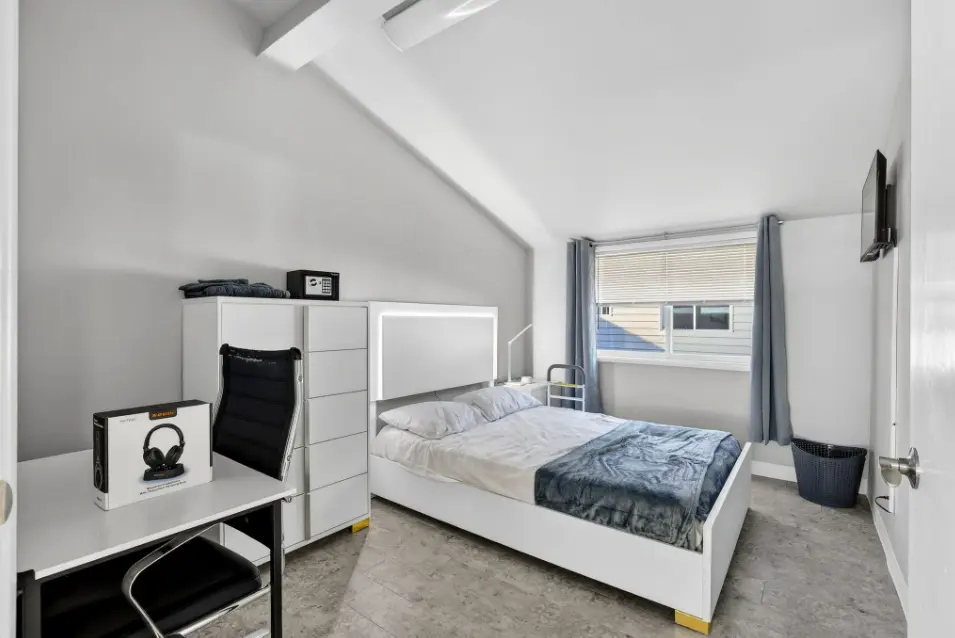


If you are reading this, there is a good chance you are the one doing the research. Maybe your son, your partner, or your sister finally said yes to detox, with one condition: "I am not sharing a room with strangers." Now you have a dozen tabs open, and every facility says it is private.
This guide is for you. It explains why privacy can matter so much to someone who is ashamed or scared, what "private" should actually mean, and the exact questions to ask before you help someone you love choose a place.

Why Privacy Can Decide Whether Someone Goes
Many people delay detox because of shame. They worry about being seen at their worst, being sick in front of others, or running into someone they know. For a person with a history of trauma, a shared room can feel unsafe in a way that is hard to explain.
SAMHSA's guidance on a trauma-informed approach puts safety, trust, and personal choice at the center of good care. A private room is one practical way to honor all three. If you want the research on how privacy affects sleep and stress during withdrawal, our post Is a Private Detox Room Worth It? covers it in depth.
Here is the short version for families: if privacy is the thing standing between your loved one and getting help, it is not a small request. It is the request that matters.
"Private" Does Not Always Mean the Same Thing
The word shows up in a lot of detox marketing, and it can mean very different things:
- A private room for every patient, as the standard
- Private rooms as an upgrade, with shared rooms as the default
- Semi-private rooms, which still means sharing with one other person
- A "private facility," which may only mean it is privately owned or accepts private pay
Private rooms are not standard across the industry. The only way to know is to ask direct questions and listen closely to the answers.
The Private Room Checklist
Use these questions on every call. Write down the answers so you can compare facilities side by side.
The room and the space
- Does every patient get their own room, or only some?
- Is the bathroom private or shared?
- How many patients are usually on site at one time?
- Are group activities optional during the hardest days of withdrawal?
The care inside the room
- How often does staff check on patients overnight, and how do they balance checks with rest?
- What is the staff-to-patient ratio?
- What happens if my loved one wants to be alone but is struggling?
The privacy of information
- Who can call and get updates, and what consent is needed?
- How do you protect substance use treatment records?
- If insurance is used, what shows up on statements mailed home?
That last group matters more than many families expect. A federal rule called 42 CFR Part 2 adds privacy protections for substance use treatment records, and in most cases a program needs written consent before sharing them. A good facility should be able to explain its process in plain language.
Red Flags That "Private" Is Mostly Marketing
Be cautious if you hear:
- Vague answers like "we have private room options" with no clear default
- No photos of actual rooms, or reluctance to describe the space
- Pressure to commit before your questions are answered
- Promises about outcomes, such as guaranteed sobriety
- Confusion about how patient information is shared
A facility that is truly private is usually glad to explain how it works. Hesitation is information too.
What a Genuinely Private Setting Looks Like
When the answers line up, the experience tends to look like this. Your loved one has a door that closes and a quiet place to rest when symptoms peak. Staff knock, check in often, and respect sleep. Common spaces are there when they feel ready, not required on the worst day.
Ask any facility to walk you through a typical first day and night. The details they share, or skip, can tell you a lot about how private the stay really is.
How to Talk With Your Loved One About It
Privacy can be an opening, not just a requirement. You might say, "I found a place where you would have your own room. Do you want to look at it together?" Showing photos of the space can make detox feel less abstract and less frightening.
Let them ask their own questions when they are ready, and offer to make the first call with them on speaker. Avoid promising anything a facility has not confirmed. Trust is fragile right now, and accurate expectations protect it. Families need support too, and our family program is one place to start.
Always Confirm Medical Safety Too
A private room is only part of the picture. Make sure the facility provides medically monitored detox with round-the-clock care, and ask how it decides when someone needs a hospital instead. Privacy and safety should come together, never one at the cost of the other. You can also check licensed programs through SAMHSA's FindTreatment.gov.
Privacy at Rose City Detox
Rose City Detox is a private detox center in Southeast Portland. Every patient has their own room, in a calm, campus-style setting supported by a small team with a high staff-to-patient ratio. Care is personalized, compassionate, and supported 24/7, starting with a full medical and psychological assessment.
You are welcome to look through our gallery with your loved one before anyone picks up the phone. When you are ready, our admissions team can walk you through these questions and go over cost and coverage with you. We accept most Oregon Health Plan (OHP) plans. See how admissions works, or reach out to us today.