If you've ever wondered whether it's safer to quit on your own or get professional help, you're asking exactly the right question. The answer matters more than most people realize, and the stakes are not equal for every substance.
Medically supervised detox is, by a wide margin, safer than attempting withdrawal alone for alcohol, benzodiazepines, and opioids. This isn't a marketing position. It's what decades of clinical evidence show, and it's worth understanding why before you or someone you love makes a decision in either direction.
The fear that detox facilities are over-medicalized, impersonal, or somehow more dangerous than home withdrawal is a common one. It's also a myth worth taking apart piece by piece.
Why "White-Knuckling It at Home" Can Be Deadly
Alcohol withdrawal is one of the only withdrawal syndromes that can kill you. That's not hyperbole. Severe alcohol withdrawal can progress to a condition called delirium tremens (DTs), which carries a mortality rate of up to 15% when left untreated, according to clinical literature reviewed by the National Library of Medicine. With proper medical management, that number drops dramatically.
Benzodiazepine withdrawal carries similar risks. Seizures can occur anywhere from 24 to 72 hours after the last dose, and without someone monitoring you, a seizure at home may go unmanaged until it becomes a medical emergency.
Opioid withdrawal is rarely fatal on its own, but the dehydration, heart rate elevation, and physical collapse that can accompany severe withdrawal create real medical risk. The bigger danger with opioids is relapse: tolerance drops fast after even a few days of abstinence, and someone who returns to their previous dose has an outsized chance of overdose. Having medical support through that window changes the trajectory.
What Medical Supervision Actually Looks Like
A common misconception is that "medically supervised detox" means being strapped to a hospital bed in a sterile room. That's not what good detox care looks like. At Rose City Detox, you have your own private room, and the environment is designed to feel calm rather than institutional.
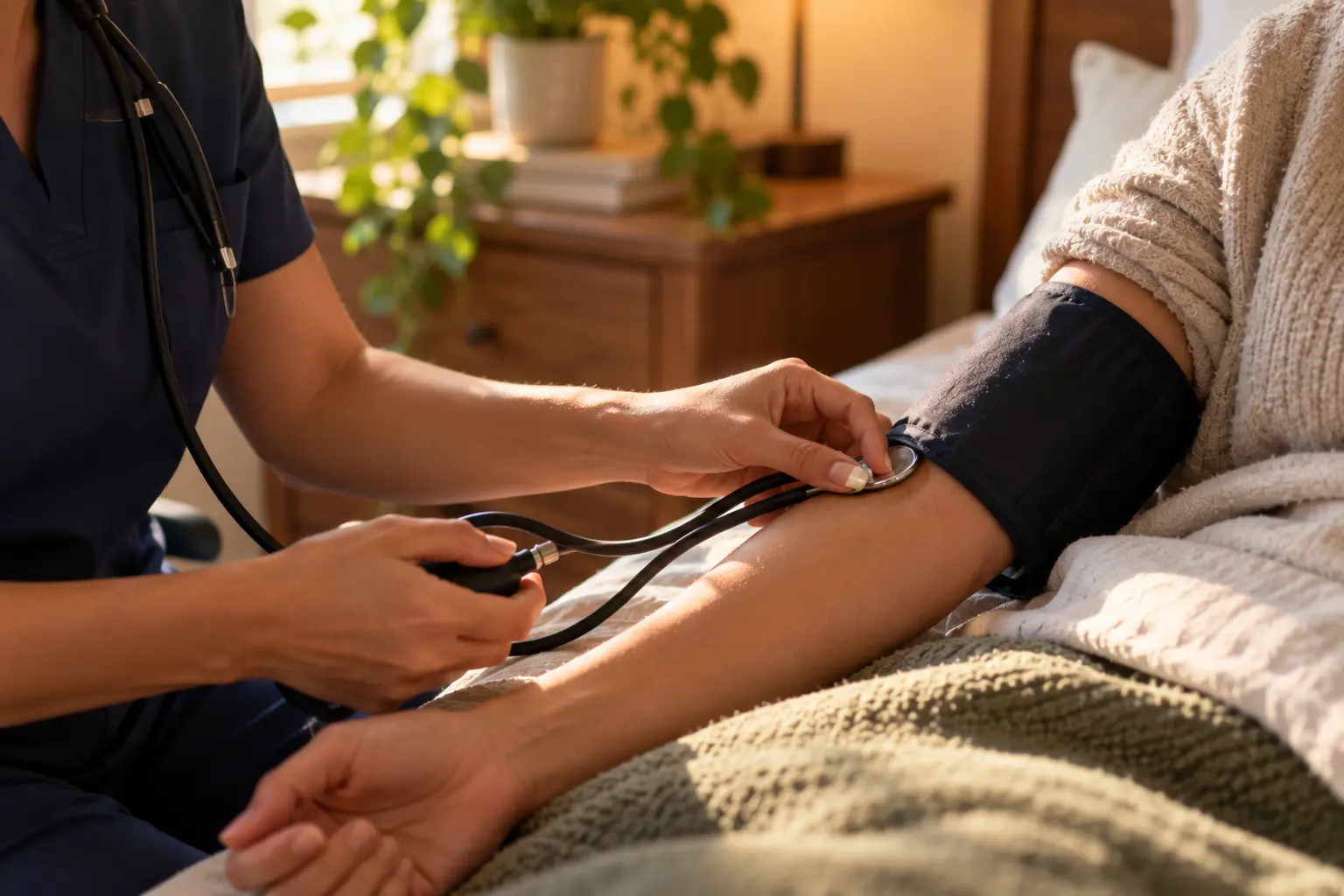
What 24/7 monitoring actually means is that trained nurses and medical staff are available to catch dangerous symptoms before they escalate. Medication-assisted treatment is used where appropriate — not to sedate patients into compliance, but to manage the specific neurological and physiological processes that make withdrawal dangerous and unbearable. Vital signs are checked. Pain is taken seriously. Sleep is supported.
The clinical framework for this approach is well-established. SAMHSA's Treatment Improvement Protocol 45 identifies medically supervised withdrawal management as the standard of care precisely because of the risk variables that can't be predicted or controlled at home.

The Seizure Timeline: Why Timing Matters
Alcohol withdrawal seizures typically occur between 6 and 48 hours after the last drink. Benzodiazepine seizures often come later, sometimes not until 72 hours in, depending on the half-life of the drug. These windows are not always predictable.
At home, a person has no way to know where they fall on the severity spectrum until symptoms appear. Someone who has previously experienced mild withdrawal may assume they'll have mild withdrawal again. That assumption has proven wrong often enough that clinicians treat every alcohol withdrawal with caution.
Under medical supervision, clinicians use validated tools like the Clinical Institute Withdrawal Assessment for Alcohol (CIWA-Ar) to score symptom severity in real time and adjust treatment accordingly. That level of responsiveness is simply not possible alone.
What the Evidence Says About Outcomes
Supervised withdrawal management consistently outperforms unsupervised attempts across multiple outcome measures. Completion rates are higher. Medical complications are caught and treated earlier. Patients are more likely to transition into the next level of care, which matters enormously for long-term recovery.
The five-to-seven day structure at Rose City Detox exists for a reason. It covers the full acute withdrawal window for most substances and gives the care team time to complete a full medical and psychological assessment, stabilize the patient medically, and develop a real aftercare plan. That plan might include residential treatment, outpatient therapy, or ongoing counseling. You can read more about what happens after stabilization in our after detox care tips resource.
Detox alone isn't treatment for addiction. But it is the medically necessary first step that makes treatment possible. Without a safe withdrawal, nothing that comes after it can hold.

Common Concerns About Medically Supervised Detox
"I don't want to be over-medicated."
This is worth asking about directly when you call. Medication is used at Rose City Detox to manage symptoms and prevent dangerous complications, not to keep patients passive or sedated. The goal is stabilization with the patient as an active participant in their own care.
"I've heard detox is just the beginning and doesn't really help."
That's partially true and worth being honest about. Detox addresses physical dependence. It doesn't, by itself, address the underlying patterns that led to substance use. That's why case management is built into the program. It connects each patient to what they need next, whether that's a residential program, an intensive outpatient program, or ongoing counseling. Detox without a next step is detox without a plan.
"I'm worried about the cost."
Rose City Detox accepts Oregon Health Plan (OHP), which covers most Medicaid-eligible patients at zero out-of-pocket cost. If you have private insurance or are considering private pay, the admissions team can walk you through your options during a phone verification. You can start that process through the admissions page or by calling directly.
"Is it safe for my specific substance?"
The answer varies by substance, and that's worth understanding in detail. Alcohol detox and benzodiazepine withdrawal carry the highest medical risk. Opioid withdrawal, including fentanyl detox, carries different risks, particularly around the relapse and overdose danger during the post-withdrawal window. The assessment process at admission is designed specifically to identify where you are medically so the care plan fits your actual situation.
The Honest Answer
Is medically supervised detox safe? Yes, and more than that: for alcohol and benzodiazepine withdrawal especially, it is significantly safer than the alternative. The research supports this clearly. The clinical guidelines built on that research are unambiguous about it.
The fear of entering a detox facility is real and understandable. So is the fear of withdrawal itself. But the evidence does not support the idea that going through withdrawal alone at home is the more dignified or cautious choice. In many cases, it is the more dangerous one.
If you're doing this research for yourself or for someone you care about, that concern is already a form of courage. The team at Rose City Detox is small enough to offer genuinely personalized attention, and the structure is built around keeping people safe through every hour of the withdrawal process. If you'd like to hear from others who have been through the program, you're welcome to read our client reviews on Google before you make a call.
If you're ready to take the next step, Rose City Detox is here to help. Contact us today to get started.